
Unlock Innovation with Custom Software Development
Custom software development is the key to solving unique business challenges that off-the-shelf solutions simply can’t address. Many organisations struggle with rigid, generic software that doesn’t align with their workflows, leading to inefficiencies and missed opportunities. As your business grows, these limitations can hinder productivity, scalability, and your ability to innovate.
By investing in custom software development, you gain a competitive edge through solutions designed specifically for your processes, goals, and customers. Custom applications can automate manual tasks, integrate seamlessly with existing systems, and adapt as your business evolves. This flexibility ensures you’re not just keeping up with the competition, but setting the pace in your industry.
Our team of experienced developers, designers, and strategists work closely with you to understand your vision and deliver robust, scalable, and secure software. Whether you need a new product, a business tool, or a complete digital transformation, we’re here to turn your ideas into reality.
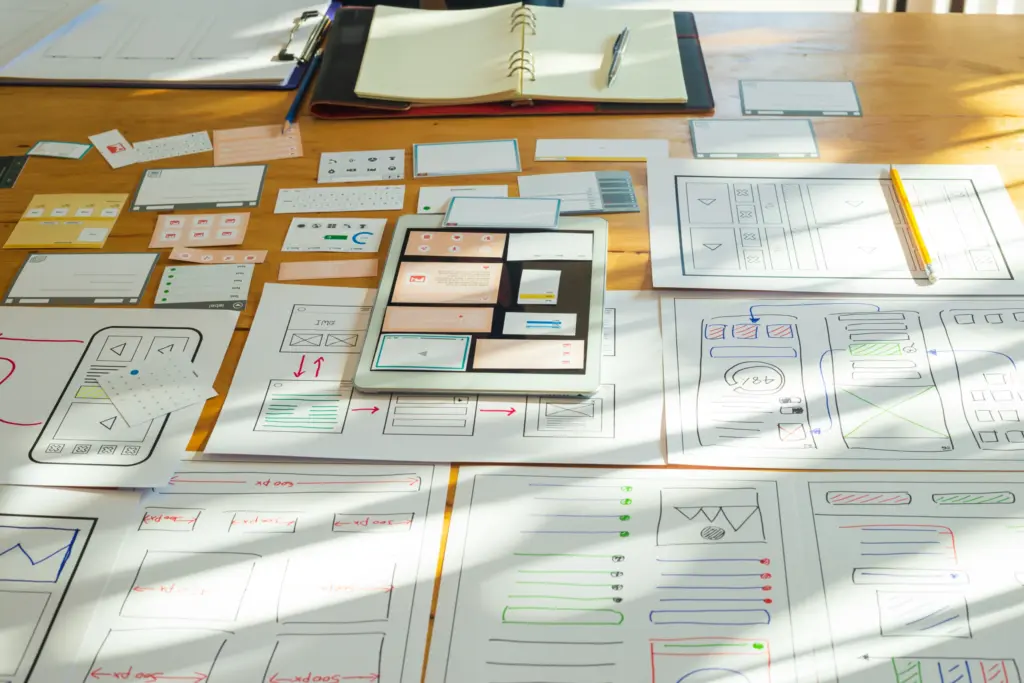
Custom solutions to overcome any business challenges

Fixed Cost Project
Consistent, dependable results for your most important projects. Our fixed-cost approach is ideal for organisations with well-defined requirements and a clear project scope. You gain the advantages of thorough planning, assured delivery, and complete cost transparency – eliminating unexpected surprises.
Learn More

Continuous Agile Development
Ongoing software development delivery to meet business objectives. Our agile approach is perfect for organisations that require adaptability as business needs evolve. We work alongside your team in iterative sprints to continuously develop, adjust, and optimise your software solutions for the greatest effectiveness.
Learn More
Custom solutions to overcome any business challenges
Conversion path optimisation
Creates clear routes to conversion points, removing obstacles that prevent users from completing valuable actions.
Customer journey mapping
Prioritise your most high value offerings, making revenue-generating content simple to access for potential customers.
Strategic navigation
Intuitive menu systems that guide users toward high-value pages and increase conversion opportunities.
SEO driven
Build an information framework that targets content to different users in different stages of the buying cycle.
Frequently Asked Questions
How does information architecture improve website usability?
Information architecture (IA) enhances website usability by providing a well-organised structure that guides users through content in a logical and intuitive manner. When content is categorised clearly and navigation is streamlined, users can quickly locate the information they need, whether it’s a product, service, or resource. This structure reduces frustration, shortens the time spent searching for information, and leads to a more satisfying user experience. Clear pathways to important content ensure that users feel confident in their ability to navigate the site, reducing bounce rates and encouraging deeper engagement.
Moreover, effective IA reduces the users’ mental effort required to understand and interact with a website. By organising content logically, the user is presented with fewer choices at each step, making decision-making easier. This not only improves usability but also increases the likelihood of conversions, as users can complete tasks, such as making a purchase or submitting a form, without unnecessary hurdles. A well-thought-out IA helps users move seamlessly through your site, making it a crucial element of both user experience design and overall website performance.
What's the difference between information architecture and navigation design?
Information architecture focuses on the structure and organisation of content, while navigation design is about how users move through that content. Information architecture ensures that the content is in the right place, while navigation helps users access it easily. Both are crucial in playing a part in website usability.
How does information architecture affect SEO performance?
A well-organised information architecture improves SEO by making your site easier for search engines to crawl and index. Proper content hierarchies and internal linking help search engines understand the relationships between pages, boosting visibility and rankings.
How is content categorised in information architecture?
Content is categorised based on logical groupings that reflect how users search for information. This often involves organising content by topic, user intent, or task. Effective categorisation makes it easier for users to find relevant information quickly.
How does information architecture impact conversion rates?
Information Architecture directly impacts conversion rates by improving user experience. When users can easily find the information they need, they are more likely to complete actions such as making a purchase or filling out a contact form, leading to higher conversions. It also allows users to make decisions easier if they are in a rush or want to get the objective completed as quickly as possible.
What tools do you use for creating information architecture?
We primarily use tools like Figma, Microsoft Whiteboard or Excalidraw to produce site mapping, wireframing, and user testing.
These tools allow us to visualise and test IA configurations before implementation, ensuring an effective structure.
How do you ensure information architecture aligns with business goals?
What is the relationship between content strategy and information architecture?
How often should information architecture be updated?
Information architecture is best reviewed at the beginning of a website build to understand how the foundation of the website should be set up. This sets it up for long term digital marketing success.
If you’re an existing business, this can still apply to your website as re-organising content and structure can immediately boost your websites effectiveness as information architecture is a form of Conversion Rate Optimisation.